
What is local SEO? It is the work of helping a business appear in Google Maps and local search results when people look for a service in their area. It works by giving Google complete, accurate information about your business and by building the signals that make customers choose you, such as reviews and a clear website.
This guide explains the idea in plain language, shows what Google itself says about local rankings and ends with steps you can start this week. It was written by Deepak TMS at Usher Media.
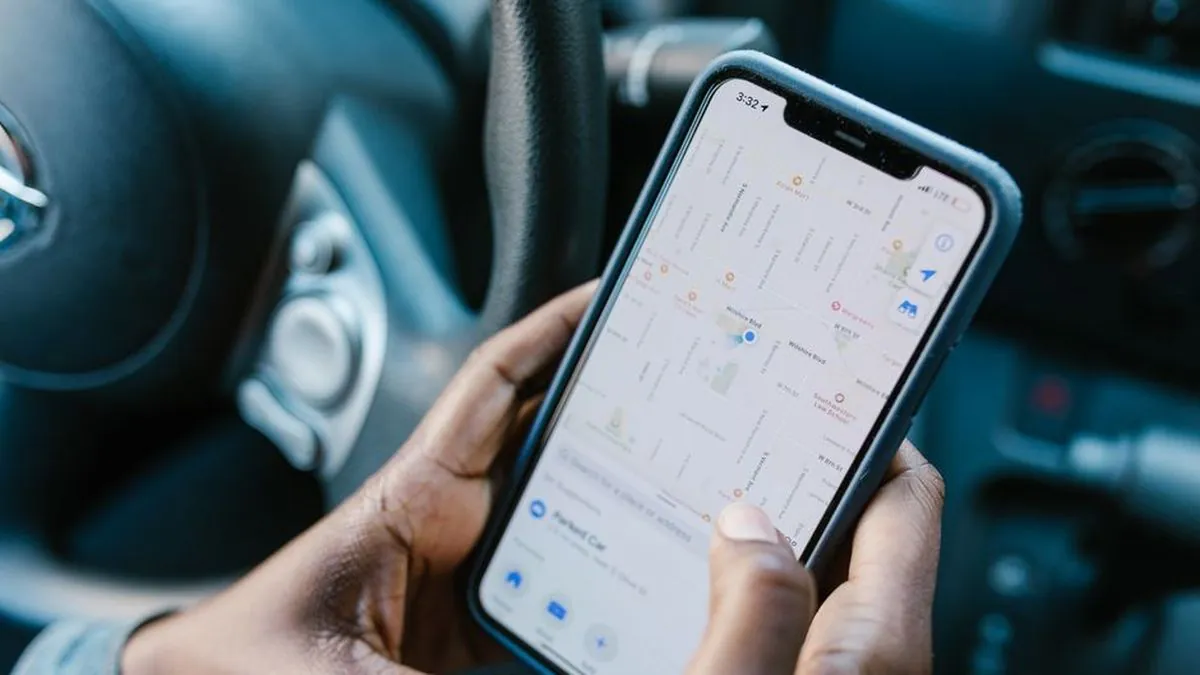
What is local SEO and who needs it?
Local SEO is a branch of search engine optimization for businesses that serve customers in a particular place. It matters whenever buyers add a city, a neighborhood or a service to their search. These businesses usually gain the most from it.
- Shops, restaurants and salons that customers visit in person.
- Clinics, dentists and other practices with a street address.
- Plumbers, electricians, cleaners and other trades that travel to customers.
- Businesses with several branches, each serving its own town.
- Professional firms, such as accountants, that win clients from one region.
How does local SEO work?
Local SEO works by matching what a searcher needs and where they are to the businesses Google considers the best fit. Google looks at the words typed, the searcher's location and the information it holds about businesses in that area. The cycle runs like this.
- A person searches for a service, often with a city or neighborhood in the words.
- Google decides whether the searcher wants local results, usually shown with a map.
- It checks the business information it holds, such as your Business Profile and website.
- It ranks businesses using relevance, distance and prominence.
- The searcher compares the listings, then calls, visits or taps through to a site.
What are the local SEO ranking factors?
Google's Business Profile Help names three factors: relevance, distance and prominence. These local SEO ranking factors come straight from Google's own guidance on improving your local ranking, so treat anything beyond them as an educated guess.
- Relevance is how well a profile matches what someone is searching for. Google asks you to provide complete and detailed business information.
- Distance is how far each business is from the person searching. You cannot move your customers, so the other two factors matter more to you.
- Prominence is how well known a business is. Google says more reviews and positive ratings can help your local ranking.
Google is also direct about one myth: there is no way to request or pay for a better local ranking.
How is local SEO different from traditional SEO?
Traditional SEO tries to rank pages for topics anywhere. Local SEO tries to win searches tied to a place. The two share a foundation, but they lean on different assets.
| Topic | Traditional SEO | Local SEO |
|---|---|---|
| Goal | Rank pages for topics | Appear for searches tied to a place |
| Main surface | Standard search results | Map results plus standard results |
| Key assets | Website pages and links | Business Profile plus website |
| Trust signals | Content depth and links | Reviews, consistent details, links |
| Searcher mood | Often researching | Often ready to call or visit |
- Both depend on a site that loads quickly and works on phones.
- Both reward pages that answer one question clearly.
- Both should be judged by enquiries, not rankings alone.
What does Google Maps SEO involve?
Google Maps SEO mostly means looking after your Business Profile, the listing that appears in Maps and local results. Google says verifying your business tells it you are authorized to represent it, and that complete and accurate information makes you more likely to appear in local results.
- Claim and verify the profile for your business.
- Choose the category that best describes your main service.
- Enter your address or service area, hours and phone number exactly as they are in real life.
- Use your real business name. Google's guidelines say the name should reflect your real-world name and that unnecessary information in it is not permitted.
- Add real photos and video of your work, your team and your premises.
- Reply to reviews calmly and specifically, because Google notes it shows you value feedback.
- Update hours before holidays and when services change.

Is your business a storefront, service-area or hybrid business?
Your business type decides what Google should show on your profile. Choosing the wrong one is a common setup mistake. Google separates the types by where customers are served.
| Type | Who it is | What to show |
|---|---|---|
| Storefront | Customers come to your address | Your address and hours |
| Service area | You visit or deliver to customers | Service areas, no address |
| Hybrid | You do both | Address and service areas |
- Google says to remove your address if you do not serve customers there.
- You can add up to 20 service areas, set by city, postal code or another area type.
- A service area cannot be a radius, and Google advises keeping it within roughly two hours of driving from your business.
- Approved edits can take up to 48 hours to appear.
These are the rules on Google's page about managing service areas, so check it before you edit your own profile.
How should your website support local SEO?
Your profile gets people to look at you, and your website convinces them to act. A good local site is specific about what you do and where you do it. Use this short list.
- Give each service its own page, and each area you genuinely serve its own page written for that place.
- Show your business name, address or service area and phone number the same way on every page.
- Add proof such as photos of finished jobs and customer comments you have permission to use.
- Place a call button and a short contact form where phone users can reach them.
- Match your details on directory listings, so no customer finds an old address or a former phone number.
Usher Media's own location pages show the idea. Our SEO company Boise page and our SEO company Chattanooga page are each written around that city, and both say plainly that we have no office there.
What local SEO tips can you start this week?
These local SEO tips need no special software. They take a few hours and will show you quickly where the gaps are.
- Search for your own service in your own city and note which businesses appear.
- Verify your Business Profile and fill in every section that applies to you.
- Fix mismatched details, such as an old phone number, on any directory you find.
- Ask recent customers for honest reviews, without pressure, and reply to each one.
- Improve or add one page for each core service and each area you serve.
- Upload fresh photos of real work.
- Start a simple log of every call and form with the date and how the person found you.

How do you measure local SEO results?
Count enquiries first and rankings second. A business that ranks well but gets no calls still has a problem to solve. A simple routine keeps the numbers honest.
- Record every call, form and message with its source, such as a map listing or a web search.
- Review the performance information inside your Business Profile once a month.
- Use Google Search Console to see which searches show your pages.
- Compare the same month each year, because many local businesses have busy and slow seasons.
- Ask each new customer how they found you and write the answer down.
How long does local SEO take to work?
No honest provider can promise a date. The speed depends on how crowded your market is, how complete your profile and site are and how many reviews you already have. In our work on SEO projects, early ranking movement usually shows around month three, and traffic and leads tend to climb in months four to six, though timelines vary with competition and site health.
- Progress tends to be faster when competitors are few and your profile is already complete.
- Progress tends to be slower in crowded cities, with thin websites or few reviews.
- Be wary of anyone who guarantees a first-place ranking.
How does Usher Media handle local SEO?
Usher Media offers local SEO as part of its SEO service for US businesses. We work remotely from Chennai, India, and meet clients by phone, video or WhatsApp. We have no US office, and we say so up front. Our SEO services for US businesses cover these local elements.
- Google Business Profile setup and optimization.
- Local citations on trusted US directories.
- City and service-area keyword targeting.
- A review flow and local reputation signals.
- A plain monthly report on rankings, traffic and leads, including months that went badly.
- A free Report Zero audit before you commit to anything.
When should you get help with local SEO?
You can do much of this yourself, and many owners should start that way. Help makes sense when the work stops moving or the stakes rise. Look for these signs.
- You cannot verify your profile, or it has been flagged and you do not know why.
- You run several locations or service areas and the details keep drifting out of sync.
- You have followed the steps for a few months and still see no change in calls.
- You do not have the hours to keep up with reviews, listings and reporting.
If any of these fit, ask for a free audit through our contact page and see what to fix first.
Frequently asked questions
What is local SEO in simple terms?
It is the practice of helping a business appear in Google Maps and local search results for people searching in its area. It combines a complete Business Profile, a clear website and trust signals such as reviews.
How is local SEO different from regular SEO?
Regular SEO ranks pages for topics anywhere. Local SEO targets searches tied to a place and relies on your Business Profile, reviews and consistent business details as well as your website.
Can I pay Google to rank higher in local results?
No. Google's help page says there is no way to request or pay for a better local ranking. Accurate, complete information and genuine reviews are what you can control.
Does local SEO work if I have no shop?
Yes. If you visit or deliver to customers, Google lets you list service areas and remove your address. Choose the business type that matches how you really serve people.
How long does local SEO take?
There is no fixed date. It depends on competition and on the state of your profile and site. Judge progress by calls and enquiries over several months, not a single week.
Do reviews matter for local SEO?
Google says more reviews and positive ratings can help your local ranking, and replying to reviews shows you value feedback. Ask honestly and reply to every review.
Do I still need a website if I have a Business Profile?
Yes. The profile helps people find you, while the website explains your services and areas in detail and gives visitors a clear way to contact you.
Want to see how your business shows up in local search?
Get a free Report Zero audit of your website, search presence and ads, and see what to fix first before you spend anything.
Get a free audit →